 . |
Differences Between Australia and NZ After Living In Both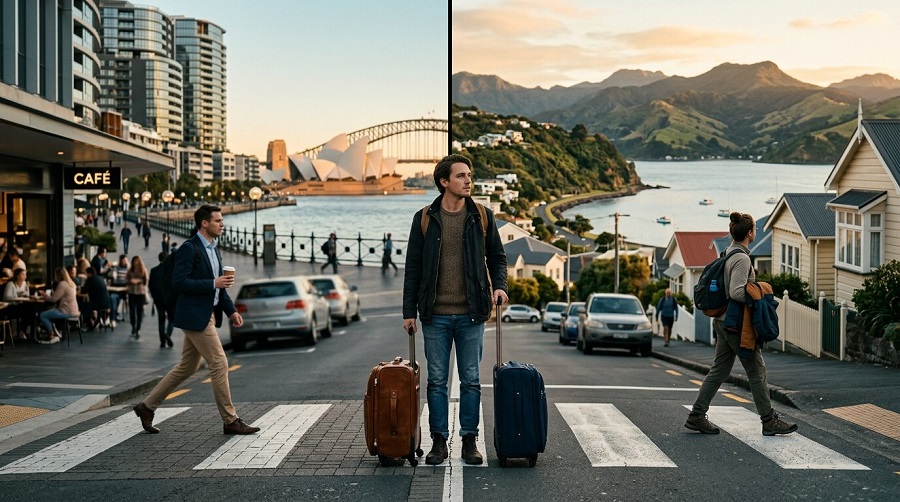
If you've lived in both Australia and New Zealand, you already know the comparison goes way deeper than beaches versus mountains. The wages, the culture, the commute, the cost of your weekly shop — it all adds up differently depending on which side of the Tasman you're on. What actually shifts your quality of life might surprise you. Which Country Should You Actually Move To: Australia or NZ?Choosing between Australia and New Zealand depends on individual priorities and circumstances. Australia generally offers higher average wages, more extensive job markets (especially in fields like finance, technology, healthcare, and mining), and a more developed superannuation system. Major cities such as Sydney and Melbourne provide diverse employment opportunities and cultural activities, but they also have higher living costs, particularly for housing, transport, and vehicle registration. New Zealand typically offers a stronger emphasis on work–life balance, easier access to outdoor recreation, and a smaller, community-oriented environment. Skiing and some outdoor activities can be more affordable or accessible relative to income, depending on location. New Zealand also has more visible integration of Māori culture into public life and institutions, and has made notable progress in electric vehicle adoption relative to its size. Neither country is objectively superior overall; the choice depends on factors such as desired income level, career goals, cost of living tolerance, preferred lifestyle, and cultural or environmental priorities. If you are planning to move from NZ to Australia, it’s a good idea to learn more about visa requirements and eligibility pathways early so you can understand your options and plan your transition smoothly. Do You Earn More in Australia After Tax and Super?Whether you take home more money in Australia than in New Zealand depends on your occupation, income level, and living costs. In many lower-skilled or mid-level roles, higher Australian wages generally translate into a larger after‑tax income. At higher professional or senior levels, the difference in net pay between the two countries tends to be smaller. Australia’s compulsory superannuation system, with employer contributions currently at 11% and scheduled to increase, usually results in higher retirement savings than New Zealand’s standard KiwiSaver employer contributions. However, these super contributions aren't part of your immediate take‑home pay, so they primarily affect long‑term rather than short‑term finances. On the cost side, Australia often has higher expenses in areas such as car purchase prices, registration, insurance, and rent, although this varies by city and region in both countries. These higher living costs can offset some or all of the benefit of higher gross wages. To assess your situation accurately, it's advisable to use up‑to‑date tax and income calculators specific to each country. Include income tax, Medicare levy (in Australia), superannuation and KiwiSaver contributions, and estimated living costs for the locations you're comparing. This approach provides a clearer picture of your real net position before making a decision. Cost of Living in Australia vs New Zealand: What You'll Actually SpendUnderstanding day-to-day expenses is as important as comparing gross salaries. In general, rents in Sydney are around 20–40% higher than in Auckland, making housing one of the most significant cost differences. Vehicle ownership in Australia can also be more expensive due to higher registration fees, insurance costs, and road tolls, whereas New Zealand’s higher rate of electric vehicle uptake and different fee structures can keep some running costs lower. Groceries and alcohol are often slightly cheaper in New Zealand, although this varies by product and location, while Australia’s larger retail sector offers greater variety and more discount chains. Major Australian cities also tend to have higher commuting costs, especially where toll roads and longer travel distances are common, as well as higher average spending on dining out and entertainment. For many skilled workers, higher Australian wages and compulsory superannuation contributions can offset these additional expenses. In contrast, people in lower-paid roles may experience more financial pressure in Australia, as the higher living costs aren't always fully balanced by higher pay. Cars, Tolls, and Transport: Where Expats Get Caught OutFor many expats, the overall cost of transport in Australia is significantly higher than expected. Vehicle purchase prices are generally higher than in New Zealand, and registration (rego) can be substantially more expensive, with fees varying by state and sometimes reaching several times New Zealand levels when compulsory third-party insurance is included. Ongoing costs such as comprehensive insurance, fuel, and routine servicing also add considerably to annual expenses. Toll roads are widely used in cities like Sydney, Melbourne, and Brisbane. Using these roads without a toll account or pass can result in additional administration charges or fines, so it's important to set up an electronic tag or online account soon after arrival. Public transport quality and coverage differ between cities and suburbs: while some inner-city areas are well served, outer suburbs—particularly in cities like Brisbane and Perth—may have limited services and frequencies, making car ownership more of a necessity for many households. These factors should be incorporated into any cost-of-living assessment before relocating. Career Growth and Job Market Scale in Australia vs NZAustralia generally offers a larger and more varied job market than New Zealand, particularly for expats seeking career progression. Major cities such as Sydney and Melbourne host many regional headquarters and large organisations, and average salaries are often higher than in New Zealand—commonly estimated at around 10–30% more in sectors like information technology, healthcare, engineering, and mining, though exact figures vary by role and location. The Australian labour market tends to have more senior and specialised positions, with clearer promotion pathways in larger corporations. In contrast, New Zealand workplaces are often characterised by flatter organisational structures, which can limit the number of senior roles and slow formal upward progression. This environment can favour generalists who are able to work across multiple functions rather than narrow specialists. New Zealand’s comparative strengths lie in areas such as agriculture, environmental management, and tourism. These sectors provide meaningful work and can be attractive for people interested in sustainability, primary industries, or lifestyle factors, but they may offer fewer high-level corporate or niche executive roles than are available in Australia’s larger, more diversified economy. Work-Life Balance: Who Actually Works Fewer Hours?When comparing work-life balance between Australia and New Zealand, the picture is mixed and depends heavily on sector, role, and individual circumstances. On average, New Zealand workers tend to report slightly better work-life balance, with somewhat fewer weekly hours and a stronger cultural emphasis on time off and flexibility. New Zealand employment law also provides relatively robust leave entitlements and protections around working hours, which can limit excessive overtime in many roles. In Australia, higher average wages—particularly in sectors such as finance, technology, and mining—are often associated with longer working weeks and more frequent unpaid overtime. Corporate and professional roles in major Australian cities commonly extend beyond standard office hours, which can erode leisure time despite higher pay. However, averages can be misleading. In New Zealand, people combining two or more part-time or casual jobs to achieve a full income may end up working hours comparable to or exceeding those of some Australian full-time employees. Within New Zealand, public sector roles and many office-based positions are more likely to keep to regular schedules, while in Australia, large corporate environments are more prone to extended hours and after-hours availability expectations. Food, Beer, and Groceries: Which Country Is Cheaper Day to Day?Day-to-day spending on food and drink significantly affects overall living costs in both countries. In general, supermarket groceries are slightly cheaper in Australia, partly due to a larger market, stronger competition between major chains, and a wider range of imported goods that can help keep some prices down. However, fresh produce and dairy can be relatively expensive in New Zealand, particularly in smaller towns or more remote areas where supply and transport costs are higher. Alcohol pricing differs notably. Beer and spirits tend to be more expensive in Australia, influenced by higher excise taxes and regulatory settings, while wine is often cheaper there due to larger domestic production and broader availability of budget options. When dining out, New Zealand can be somewhat more affordable for casual options such as fish and chips or standard pub meals, though prices vary by region and venue. Transport and access also affect effective food costs. In parts of Australia, longer distances to major supermarkets, reliance on driving, and toll roads in some cities add to the overall cost of a routine grocery trip. These factors mean that, even if shelf prices are comparable or slightly lower, the total weekly cost of food and drink can be higher once transport and incidental expenses are included. How Daily Life, Culture, and Social Norms Differ Between CountriesDaily life in New Zealand is generally perceived as more relaxed than in Australia’s major cities, where faster-paced urban environments and longer working hours are more common. In New Zealand, standard working hours tend to be slightly shorter on average, and annual leave provisions and work–life balance policies are comparatively favourable, contributing to a less time-pressured daily routine. Social interactions in New Zealand are often informal, and community-oriented behaviour is common, particularly in smaller towns and regional areas. Māori representation in public roles—such as media presenters, police officers, and politicians—is relatively visible and is supported by official recognition of te reo Māori and Māori cultural practices in public life. In Australia, First Nations representation and visibility are increasing but may be less prominent in everyday public-facing roles by comparison. Australian urban social life can appear more formal or reserved, especially in larger cities, though this varies by region and social context. Smoking in public places, while regulated in both countries, has historically been more prevalent in some Australian urban settings, though both countries have strong tobacco control policies and declining smoking rates. In terms of transport, New Zealand has seen a noticeable uptake of electric vehicles in recent years, supported by government incentives and a smaller overall vehicle fleet, which can contribute to lower congestion in many areas. By contrast, major Australian cities typically experience heavier traffic, a more extensive system of toll roads, and higher average vehicle registration and operating costs, which can have a greater impact on household budgets. Beaches, Mountains, and Outdoor Life: What Each Country Offers ResidentsBoth countries provide strong opportunities for outdoor activities, but in different ways. In New Zealand, mountain and coastal environments are relatively close to most population centers. Alpine areas, fjords, and national parks are generally accessible by car within a few hours, which supports activities such as hiking, tramping, mountaineering, and backcountry skiing throughout much of the year, depending on region and season. Established ski fields near places like Queenstown and Mt Ruapehu offer structured winter sports facilities without requiring very long domestic travel for many residents. Australia, by contrast, is characterized by extensive coastlines and large internal distances. The country has over 25,000 km of coastline, with many surf beaches located near major cities such as Sydney, Melbourne, Perth, and Brisbane. Marine environments like the Great Barrier Reef support snorkeling and diving, while the interior regions (the “outback”) offer options for multi-day driving trips, camping, and remote-area touring. However, because of Australia’s size, accessing different types of landscapes often involves longer drives or domestic flights. In practical terms, New Zealand tends to offer relatively quick access to mountainous and wilderness areas, while Australia offers a wider range of climatic zones and landscapes, with distance and travel time as a more significant factor in planning outdoor activities. Cultural Differences Between Australia and NZ That Caught Me Off GuardWhile outdoor life highlights some practical differences between the two countries, the cultural contrasts extend further and often only become clear once you have spent time living in each place. In Australia, major cities tend to feel faster-paced, more formal, and more focused on career progression. Public institutions, including the police, can come across as more hierarchical and less immediately approachable, and many regional areas lean more visibly conservative in their social and political views. In New Zealand, Māori culture is more explicitly integrated into public life, including regular use of te reo Māori in media and politics, bilingual signage, and ceremonial practices in official events. Everyday interactions often feel more informal, and there's a stronger emphasis on maintaining work–life balance, reflected in workplace norms and social expectations. These differences in pace, formality, and the visibility of Indigenous culture can be more pronounced than many people anticipate. ConclusionBoth countries offer something genuinely different, and the right choice depends on what you're actually chasing. If you want higher earnings and a bigger career ladder, you'll likely lean toward Australia. But if you're after a slower pace, tighter community feel, and easier access to raw nature, New Zealand's hard to beat. You don't have to get it right the first time — plenty of people try both before they decide where to stay.
|